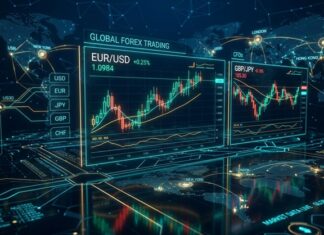

Financial markets have become far more accessible than they were a generation ago. Today, traders can speculate on currencies, stock indices, commodities, and shares from a single platform without purchasing the underlying assets. That flexibility explains why cfd trading has become increasingly popular among retail investors.
Accessibility, however, should not be mistaken for simplicity. The same features that attract traders can also introduce risks that are easy to overlook, especially during periods of heightened market volatility. Understanding both sides of the equation is more valuable than focusing only on the potential rewards.
A balanced perspective begins with knowing why CFDs appeal to active traders in the first place.
Table of Contents
1. Access to Multiple Markets From One Platform
One of the biggest advantages of CFDs is variety.
Instead of opening separate accounts for different asset classes, traders can often switch between major currency pairs, gold, crude oil, stock indices, and individual shares using the same trading platform. That makes it easier to follow opportunities across markets as economic conditions change.
Imagine inflation data comes in higher than expected. Gold weakens as bond yields rise, while certain banking stocks strengthen on expectations of higher interest rates. A CFD trader can react to either scenario without changing brokers or learning a completely different trading system.
Convenience, in this case, supports flexibility rather than guaranteeing profits.
2. Leverage Can Increase Both Opportunity and Exposure
Leverage is frequently presented as the main selling point of CFDs.
It deserves equal attention as a source of risk.
A relatively small deposit can control a much larger market position, allowing modest price movements to produce meaningful gains. The same mechanism also magnifies losses when the market moves in the opposite direction.
Here is the counterintuitive part: experienced traders often choose lower leverage than beginners, even when higher leverage is available. Preserving capital usually creates more opportunities than maximizing every individual trade.
3. Short Selling Is Built Into the Market
Many new traders assume profits are possible only when prices rise.
CFDs challenge that assumption.
Because traders can speculate on falling prices just as easily as rising ones, opportunities exist during both bullish and bearish market conditions. This flexibility becomes especially valuable during periods of economic uncertainty when downward trends develop across multiple asset classes.
The direction of the market matters less than having a well-supported reason for taking the trade.
4. Costs Extend Beyond the Entry Price
The visible spread is only part of the overall trading cost.
Depending on the market and holding period, traders may also encounter overnight financing charges, commissions, or wider spreads during periods of low liquidity. These expenses can gradually reduce returns, particularly for positions held over several days or weeks.
Many beginners focus entirely on finding the right entry while paying little attention to the cost of maintaining the trade.
That calculation deserves equal importance.
5. Risk Management Matters More Than Market Selection
Choosing the “best” market often receives more attention than managing exposure.
In practice, risk management frequently has a greater influence on long-term results.
Before opening a position, experienced traders typically consider questions such as:
- How much of the account is at risk if the stop-loss is reached?
- Is the potential reward proportionate to that risk?
- Could upcoming economic announcements increase volatility unexpectedly?
- Does this position duplicate exposure already held elsewhere?
Answering these questions encourages decisions based on planning rather than impulse. A strong market idea can still produce disappointing results if position sizing or timing is poorly managed.
The practical takeaway is straightforward. Approach cfd trading as a flexible way to access global markets, not as a shortcut to faster profits. Evaluate each opportunity by weighing both its potential return and the amount of capital at risk. When those two factors receive equal attention, trading decisions become more deliberate and easier to assess over time.